Key Takeaways
Furnace short cycling is when your furnace turns on and off rapidly, instead of running for a while. It is caused by issues that range from dirty air filters and thermostat issues to a poorly installed or oversized furnace. Having your furnace inspected in the fall can help spot problems before they cause expensive and damaging short cycling.
It’s fall, and you’re thinking about heat and possibly other things, like hot cocoa and pumpkin spice. Then you turn your furnace on, and it keeps turning on and off. Is this normal? If not, what causes it, and what can you do about it?
What is Furnace Short Cycling?
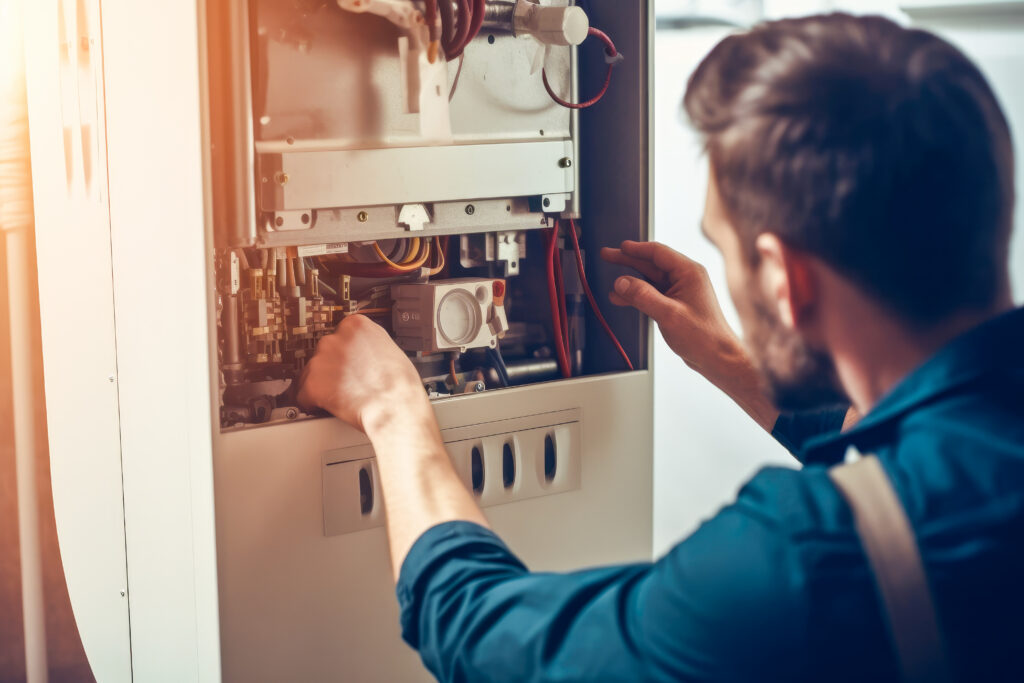
Short cycling is when your furnace turns on and off repeatedly in rapid bursts. Normally, your furnace should run for a fairly extended period, warming your home. When it has short cycles, it is not running efficiently. Your home may be unevenly heated or fluctuate in temperature, your energy bills will go up, and the life of your system may be shortened.
Common Causes of Short Cycling
There are several causes of rapid on-and-off switching, some of which are more easily fixed than others:
Dirty Air Filters
Dirty or clogged filters restrict airflow. Your furnace then overheats and shuts down to protect itself. Always change or clean your filters when the manufacturer recommends, and consider doing it more often if you have pets. The slight expense is well worth it, as dirty air filters also cause reduced indoor air quality.
Blocked or damaged vents and leaky ductwork can also cause furnace short cycling. Make sure that your vents are clear of furniture and items, including toys.
Thermostat Issues
Another very common cause of rapid on-and-off switching is inaccurate thermostat readings or other issues. It can be as simple as forgetting to change your thermostat settings from summer to winter. Your thermostat might also need new batteries, or be old and need to be replaced. Smart thermostats may need to be reset or rebooted periodically.
More seriously, issues can be caused by an incorrect thermostat location. Thermostats should be out of direct sunlight, away from drafts, and away from other heat sources, such as your stove. If your thermostat is poorly placed, consider moving it.
Upgrading to a smart thermostat can also help. Consider getting your thermostat inspected for loose connections, wear and tear, or other problems.
Incorrect Furnace Size
Unfortunately, this can be an expensive fix. It typically means you need a new furnace. But a furnace that is too large heats the space too quickly, shuts off quickly, and doesn’t heat evenly. Meanwhile, a furnace that is too small struggles and runs almost continuously. Short cycling may be a sign that your furnace is too large. Other symptoms include unusual noises, uneven temperature, and hot air from vents when the home is still too cold.
If you suspect an oversized furnace, you should call a professional. They can also make sure your furnace was properly installed.
Faulty Flame Sensor (Gas Furnaces)
This is one that a lot of people miss. Your furnace has a flame sensor that checks for a flame when the gas valve opens. This is an important safety device to ensure your home does not fill with gas.
A faulty or dirty flame sensor may incorrectly detect that no flame is present and shut the furnace down. It’s easy enough to check if the system keeps shutting down with a visible flame present; it might be the sensor.
If you suspect a dirty or faulty flame sensor, have an HVAC professional inspect and clean or replace it as needed.
Clogged Flue
Finally, your flue might be clogged. Your flue takes exhaust gases away from your furnace. If it is blocked, then the heat exchanger will start to overheat. At that point, the fan limiter trips, shutting down your furnace to avoid damage.
Your flue should be inspected regularly, and it’s a very good idea to schedule a flue inspection in the fall before you turn the heat on for the first time. Flues can be blocked externally, by things like snow or leaves, or internally by soot accumulation and/or corrosion.
Now is a great time to have your furnace and flue inspected before colder winter weather arrives. Contact Capital City Comfort Solutions to schedule a furnace inspection today and let us find these problems before they cause uneven heating and a soaring bill.