
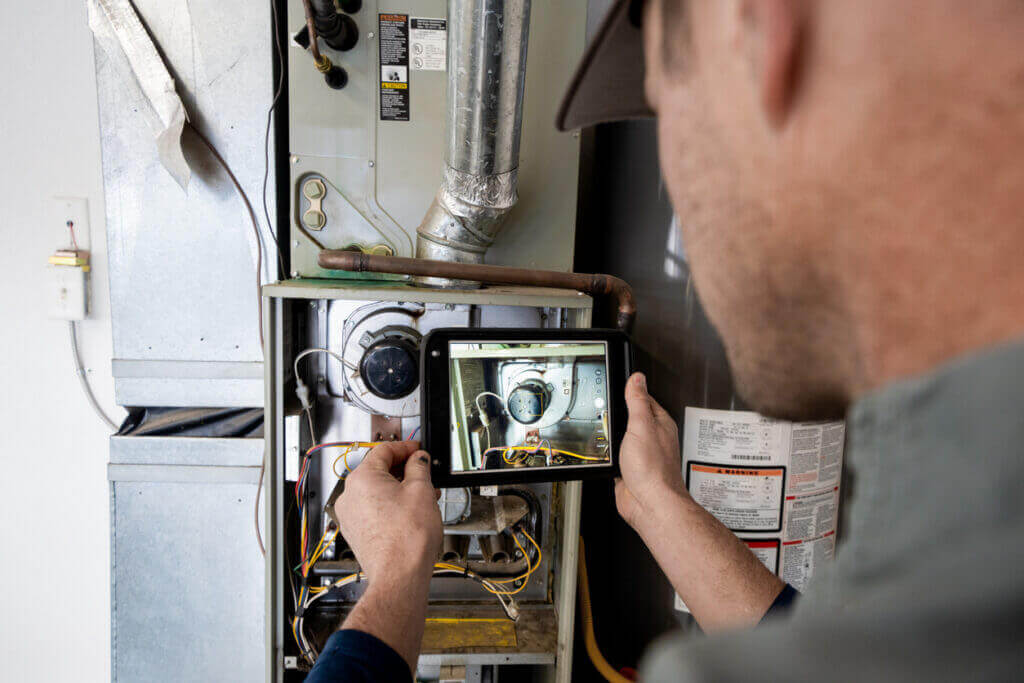
How much do you know about your furnace and how it works? Most of us take our furnace for granted. A key part of your central heating unit is the heat exchanger. What is a furnace heat exchanger, and why is it important?
What Is a Furnace Heat Exchanger?
Your heat exchanger, sometimes called a firebox or fire chamber, is the part of your central heating unit that transfers heat from the furnace into the air in the duct system. Your fans then distribute the warm air through your home.
It’s made of metal tubes, coils, plates, and fins, and a blower fan pushes air across the surface, which is then warmed. The firebox works the same way regardless of what fuel your heating system uses.
It plays a critical role in the functioning of your furnace and in keeping you and your family safe.
How Heat Exchangers Protect You
Unless you have an electric furnace, your central heating unit burns some fuel, typically propane or natural gas. Burning fuel releases toxic chemicals into the air, most especially carbon monoxide. Carbon monoxide is an invisible, odorless, and tasteless gas that can threaten your health and your life. When you inhale carbon monoxide, it binds with the hemoglobin in your blood, creating carboxyhemoglobin and compromising your blood’s ability to transport oxygen. Carbon monoxide exposure causes headaches and dizziness, and high levels can result in nausea, convulsions, unconsciousness, and death.
Your furnace’s heat exchanger allows your furnace to heat the air without gases from inside the central heating unit getting out to cause harm. However, a compromised firebox can result in the release of carbon monoxide into your home.
How to Detect a Faulty Fire Chamber
Because carbon monoxide and other toxic gases are microscopic, they can escape through cracks that are invisible to the naked eye. Visual inspection will not reveal these cracks, although rust or corrosion on your exchanger warrants immediate attention. Instead, watch for these signs of a faulty heat exchanger.
- Rotten egg smell. If you smell this, call a professional right away – you likely have a gas leak. Leave the building, taking all pets with you, and wait until a professional arrives.
- Water puddling around your central heating unit.
- Black soot around the vent area or inside the heating system. This indicates incomplete combustion and may be a problem with your exchanger or a blocked vent.
- The smell of hot metal or formaldehyde. This means your firebox is running hot, outside its normal temperature range.
- Odd noises when the furnace is operating. These could indicate a crack in your heat exchanger, which is expanding and contracting under heat.
Install carbon monoxide detectors throughout your home. You need a detector on each floor of your home, and they should be near sleeping areas. Most instances of carbon monoxide poisoning occur when people are asleep and don’t notice symptoms. Test the alarm and make sure it’s audible in all bedrooms. If you have a family member who is deaf, put a visual strobe alarm in their room. If the detector goes off, evacuate the building and call 911.
What to Do if You Think You Have a Bad Firebox
You should call a professional who can establish whether your furnace heat exchanger can be repaired or needs to be replaced. You do not have to replace your entire central heating unit. However, we will take the opportunity to inspect it for any other problems. If you have incomplete combustion, we may also need to unblock vents and/or make adjustments to reduce the risk.
Regular maintenance is essential for prolonging the life of your heat exchanger. Additionally, it’s crucial to ensure that your heating system’s drain line is not blocked, as trapped moisture can lead to rust in the firebox.
If you are worried about the condition of your central heating unit, contact Capital City Comfort Solutions. We can help fix or replace your faulty heat exchanger and check for other problems with your furnace so that it works properly and safely.
Summary:
Your furnace’s heat exchanger does more than just warm your home — it protects your family’s safety. This crucial component separates dangerous combustion gases from the air circulating through your living spaces. When it cracks or corrodes, harmful gases like carbon monoxide can leak indoors. In this blog, we explain how a heat exchanger works, signs it may be failing, and why annual HVAC inspections are essential for both efficiency and safety.